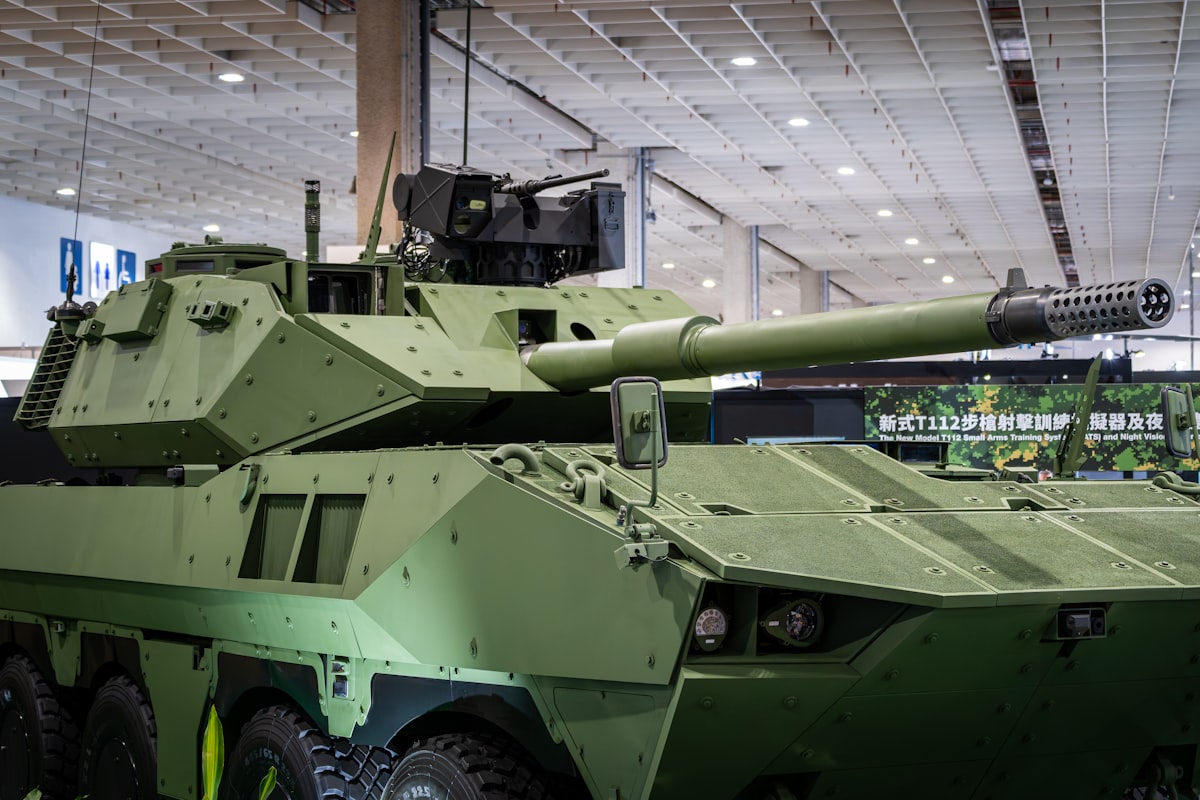
Australia’s $7–11 billion Land 400 Phase 3 procurement was conducted under a Request for Tender that told the government it was seeking ‘mature, proven technology’. As at February 2026, the selected platform carries unresolved very high technical risks in both mobility and lethality. The ANAO’s audit, published 30 March 2026, explains why: the requirement was in the document and nowhere else. No definition of ‘mature’. No minimum maturity threshold. No evaluation criteria for system readiness, integration risk, or design stability. The requirement appeared and did nothing.
The exhibit
The ANAO’s Auditor-General Report No. 26 of 2025-26 assesses Defence’s procurement of the AS21 Redback infantry fighting vehicle under the Land 400 Phase 3 programme. The audit finds that the RFT stated Defence was pursuing ‘mature and proven technology’ and then did not define the term, did not specify minimum system maturity thresholds, and did not include evaluation criteria addressing system readiness, integration risk, or design maturity. The selected platform is characterised in the audit as ‘developmental’, requiring ‘significant design and integration work.’ Risks were ‘not clearly communicated to government.’ Inconsistencies in how tendered prices and risks were adjusted ‘reduced the transparency and defensibility of the value for money assessment.’ Approved expenditure as at February 2026: $7.3 billion for 129 vehicles. The total cost range the ANAO cites is $7–11 billion.
Why it is wrong
The procurement profession’s standard response to major acquisition failures is better requirements writing. Write clearer requirements. State precisely what you need. The Land 400 audit shows this prescription misses the failure. Defence did write a clear requirement. ‘Mature, proven technology’ is not a vague statement. It is a specific, evaluable claim about what the acquisition was intended to achieve. The failure was not that the requirement was absent or ambiguous. The failure was that the requirement had no methodology attached to it.
No definition meant no threshold. No threshold meant no basis for evaluation. No basis for evaluation meant the requirement could not exclude any platform, including a developmental one. A requirement without a criterion is not a weak requirement. It is not a requirement at all.
The procurement profession conflates two different things: stating a requirement and having a method for evaluating it. These are not the same operation. A document that says ‘we want mature technology’ without specifying what ‘mature’ means in measurable terms gives evaluators nothing to apply. The vendor who asserts their platform is mature faces no test. The evaluator who accepts that assertion faces no constraint. The official who signs off faces no accountability, because the requirement on paper was present: the language appeared in the RFT.
What a careful reader would write instead
The lesson from Land 400 is this: requirements that are not operationalised into evaluation criteria are assertion, not governance. The US Defense Acquisition University’s Technology Readiness Level scale exists for this purpose: to translate ‘mature technology’ into a numbered, evidence-based threshold that a tender can be evaluated against. Australia did not use it. The RFT did not reference it. The ANAO audit does not record that it was considered.
The reform the procurement profession should be calling for is not better requirement-writing guidance. It is mandatory operationalisation: any requirement that appears in a tender must have a corresponding evaluation criterion, a defined threshold, and a specified evidentiary standard before the RFT is published. Without that, the requirement is a sentence in a document, not a constraint on what can be selected.
The punch
The procurement profession has argued at length that its practitioners deserve to be treated as strategic professionals. Strategic professionals do not confuse writing a sentence with establishing a standard. A $7 billion programme that reached contract signature without anyone defining what ‘mature’ meant in a measurable, evaluable way is not a failure of requirements quality. It is a failure of requirements governance, and the profession’s default prescription will not fix it. The requirement was already there. It just did not mean anything.
Source: Australian National Audit Office, Defence’s Procurement of Infantry Fighting Vehicles (Land 400 Phase 3), Auditor-General Report No. 26 of 2025-26, 30 March 2026, https://www.anao.gov.au/work/performance-audit/defences-procurement-of-infantry-fighting-vehicles-land-400-phase-3