“Procurement writing for people who actually buy things.”

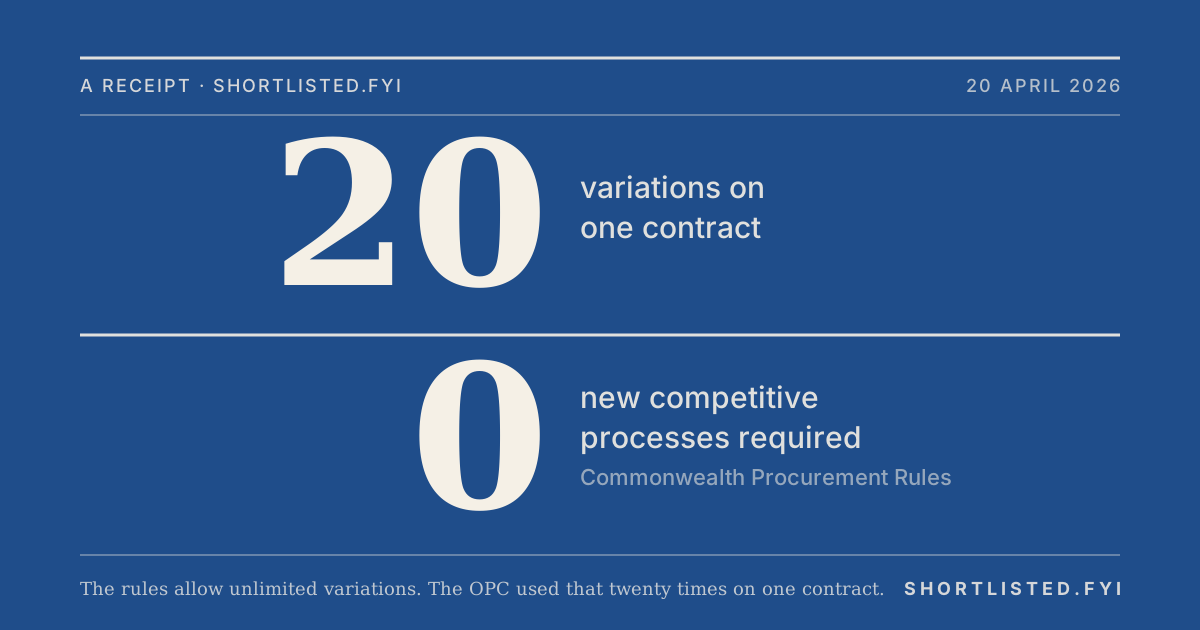
Receipt: 20 variations on one contract, 0 new competitive processes required by Commonwealth Procurement Rules

The rules permit it. That is why one contract was varied twenty times.

The Commonwealth Procurement Rules allow unlimited contract variations without requiring re-competition. The ANAO found one OPC contract varied twenty times and labelled it non-compliance, not rule design.

  • audit
  • public-sector
  • incentives
  • governance
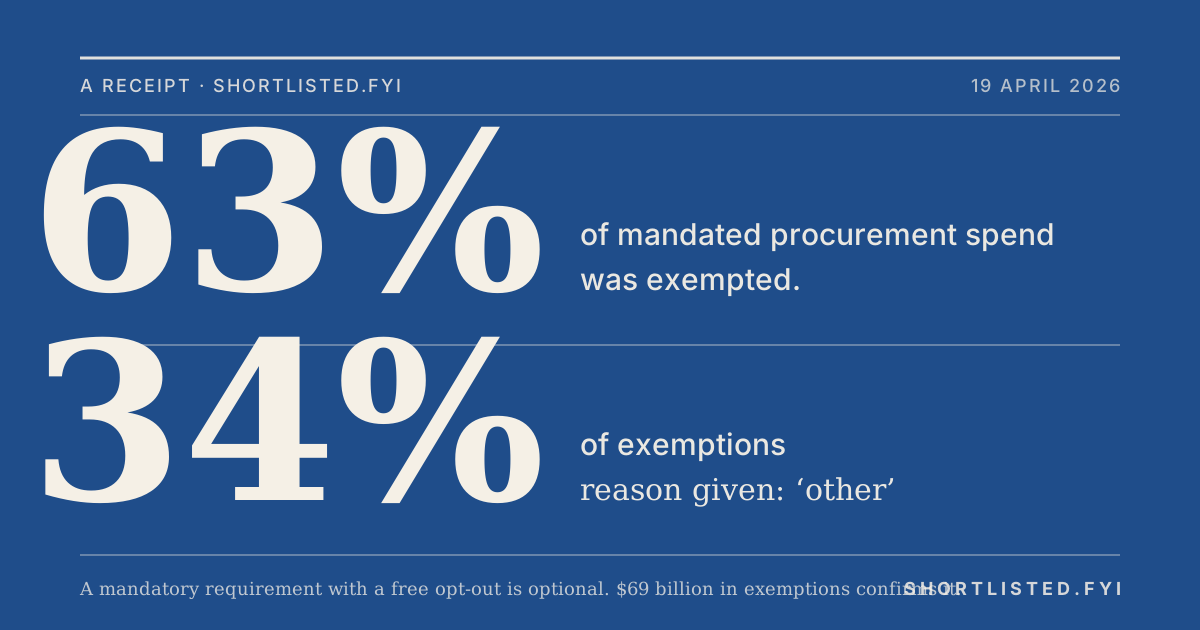
Receipt: 63 per cent of mandated procurement spend was exempted. Of those exemptions, 34 per cent gave 'other' as the reason.

The mandatory Indigenous procurement requirement exempted 63 per cent of its own spend

Nine years of Australia's Mandatory Minimum Requirements for Indigenous procurement produced $69.3 billion in exemptions, a third of them classified as 'other'. The policy's administrator never evaluated whether it changed anything.

  • audit
  • public-sector
  • incentives
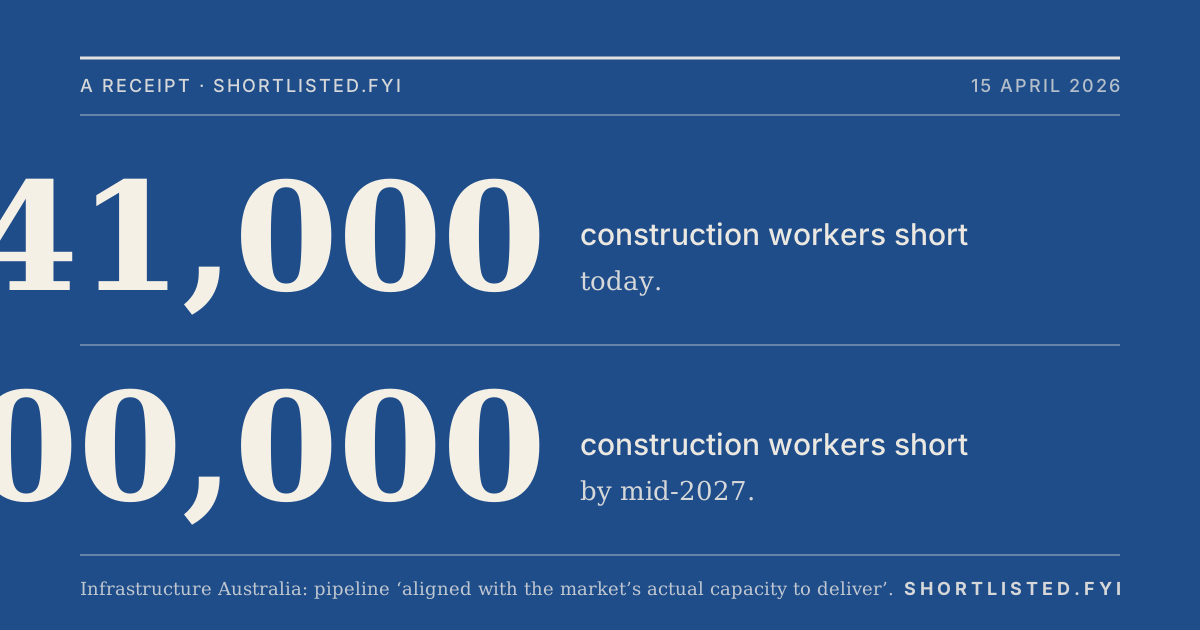
Receipt: 141,000 construction workers short today. 300,000 short by mid-2027. Pipeline still 'capacity-aligned'.

Infrastructure Australia calls it a capacity-aligned pipeline. The market calls it a delay.

Infrastructure Australia's 2026 Infrastructure Priority List claims to align the pipeline with market capacity, but the mechanism for alignment is market-forced delay: the workforce shortage fell only because the market pushed projects back, not because the planning function imposed a constraint, and a new 300,000-worker shortage peak arrives in mid-2027.

  • public-sector
  • methodology
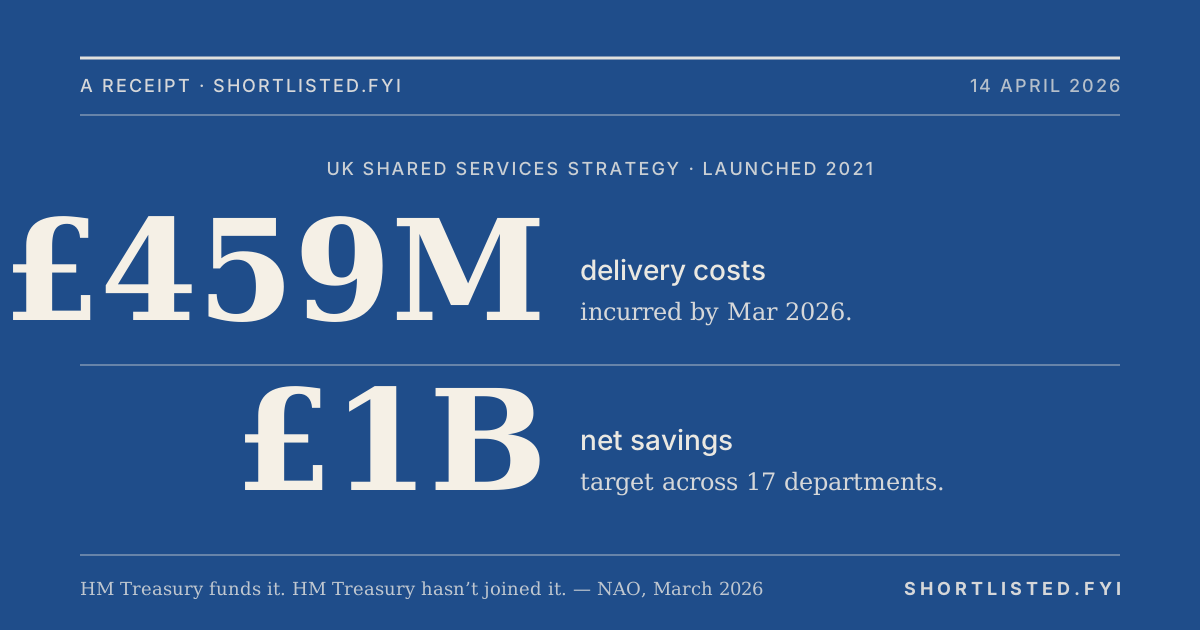
Receipt: £459M delivery costs incurred. £1B savings target across 17 departments. HM Treasury funds it. HM Treasury hasn't joined it.

The UK shared services strategy declared participation compulsory, then made it optional

The NAO's March 2026 report found the government's Shared Services Strategy unlikely to reach its £1 billion savings target because departments aren't joining. The diagnosis is governance failure. The actual problem is that the mechanism for enforcing compulsory participation hands the decision back to individual departments — which is not enforcement at all.

  • audit
  • public-sector
  • incentives
  • governance
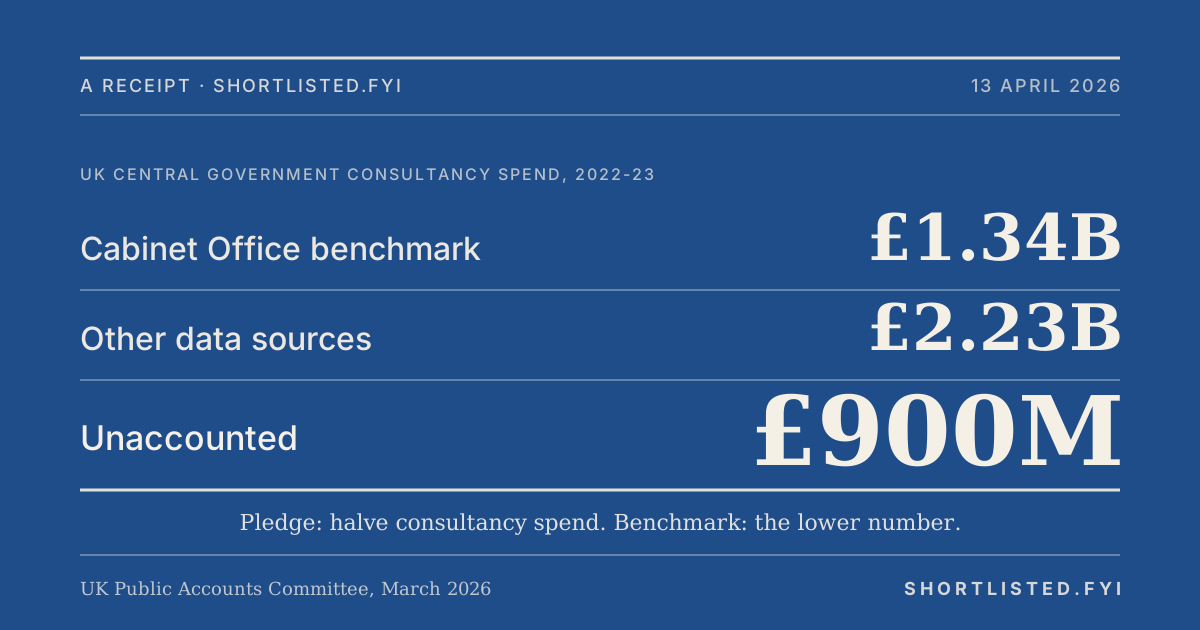
Receipt: Cabinet Office benchmark £1.34B. Other data sources £2.23B. Unaccounted: £900M.

The UK's consultancy spending target is a reclassification incentive

The PAC correctly diagnosed a £900 million data gap in UK consultancy spending — then recommended better reporting requirements on the same bundled contracts that make reclassification the path of least resistance.

  • audit
  • public-sector
  • incentives
  • governance
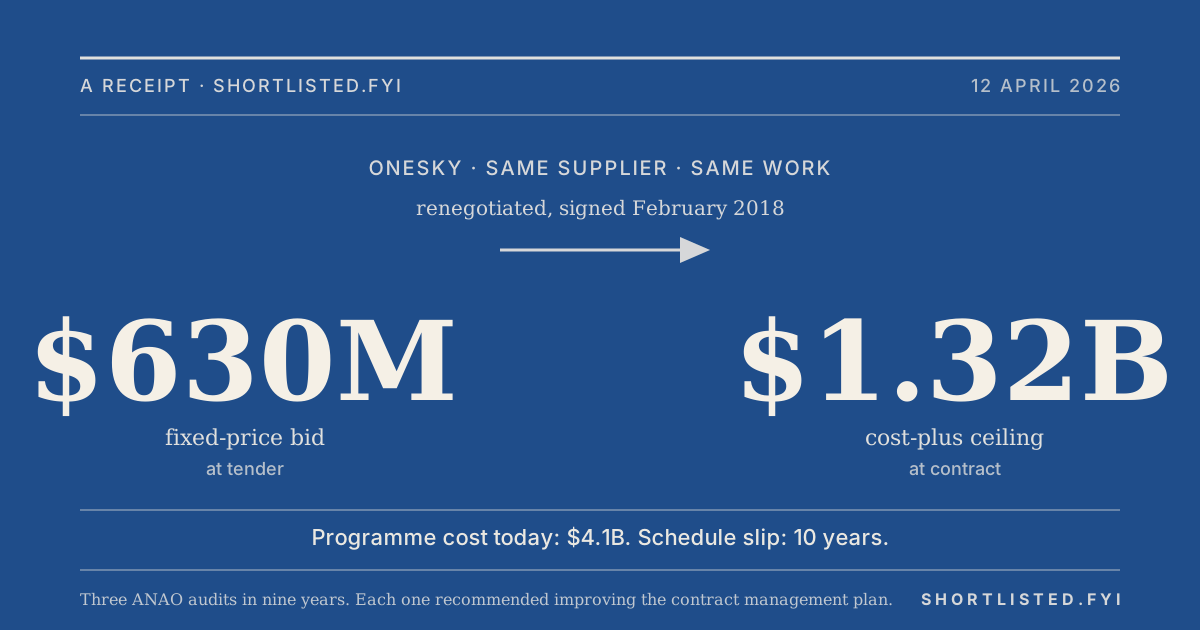
Receipt: OneSKY tendered at $630M fixed-price. Signed at $1.32B cost-plus ceiling. Same supplier, same work.

The OneSKY contract doubled in value before the work started. The incentive model did the rest.

Airservices signed a cost-incentive contract at twice the supplier's own fixed-price bid, then expressed surprise seven years later that the incentive model hadn't contained costs.

  • audit
  • public-sector
  • incentives
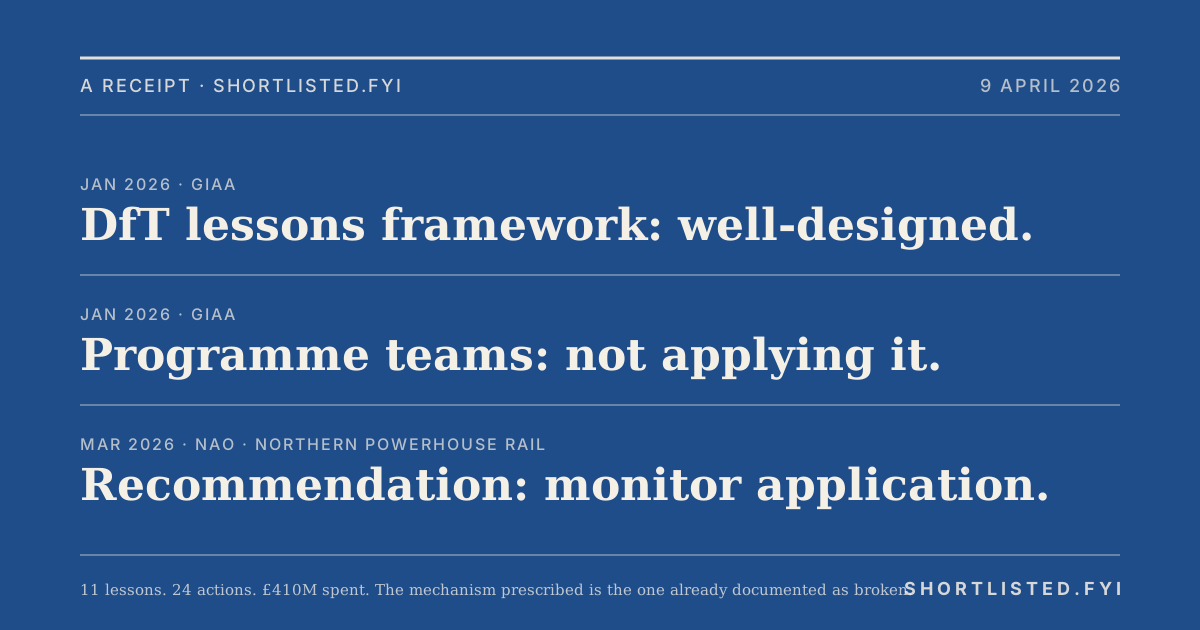
Receipt: GIAA documented the lessons framework. Teams don't apply it. NAO's prescription is more monitoring.

DfT documented the lessons from HS2. Its teams are not applying them. The fix is more documentation.

DfT has a well-designed lessons-learned framework. The Government Internal Audit Agency confirmed in January 2026 that programme teams don't apply it. The NAO's March 2026 prescription for Northern Powerhouse Rail is to monitor whether the lessons are being applied.

  • audit
  • public-sector
  • governance
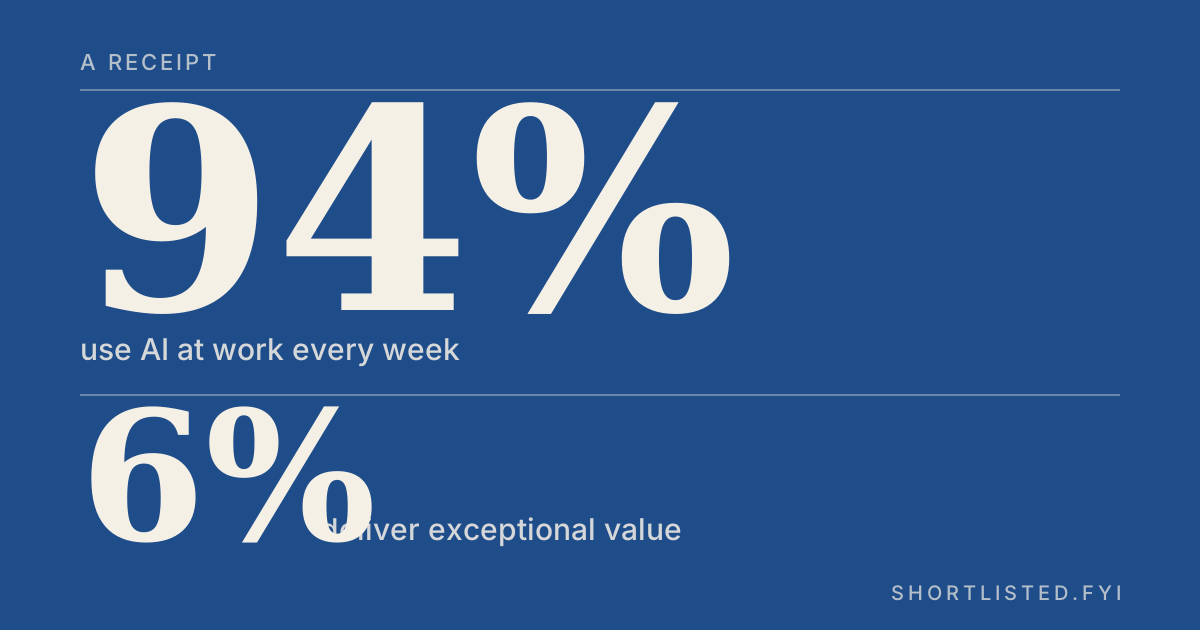
Typographic cover: 94% of procurement teams use AI at work every week, 6% deliver exceptional value

94% of procurement teams use AI every week. 6% of procurement teams deliver exceptional value.

Adoption statistics measure the newest tool, not the deepest capability. The functions being graded 'low uptake' have been running AI since before the people writing the reports knew what it was.

  • methodology
  • consulting
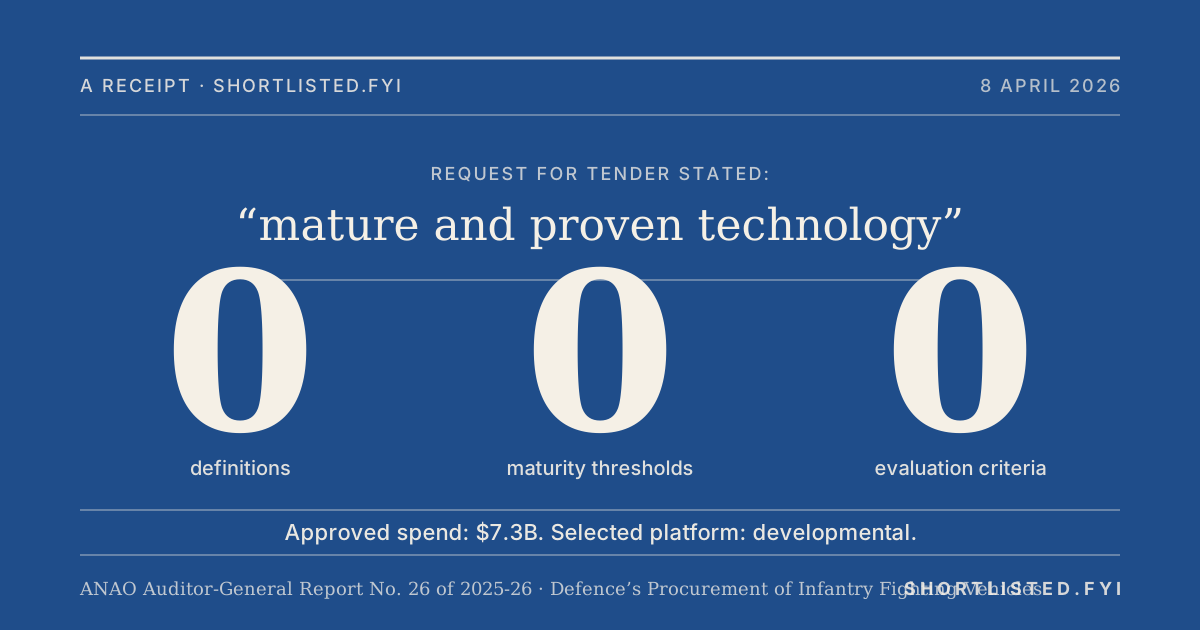
Receipt: RFT stated 'mature and proven technology'. Zero definitions, zero maturity thresholds, zero evaluation criteria. Spend approved: $7.3B.

A procurement requirement without a threshold is not a requirement

The ANAO audit of Australia's $7 billion infantry vehicle procurement found that 'mature, proven technology' appeared in the RFT without definition, threshold, or evaluation criteria. The selected platform is developmental. The lesson is not to write better requirements. It is to stop treating a stated requirement as a substitute for a measurable one.

  • audit
  • public-sector
  • methodology